The 10-Second Secret Behind Perfect Wedding Photos
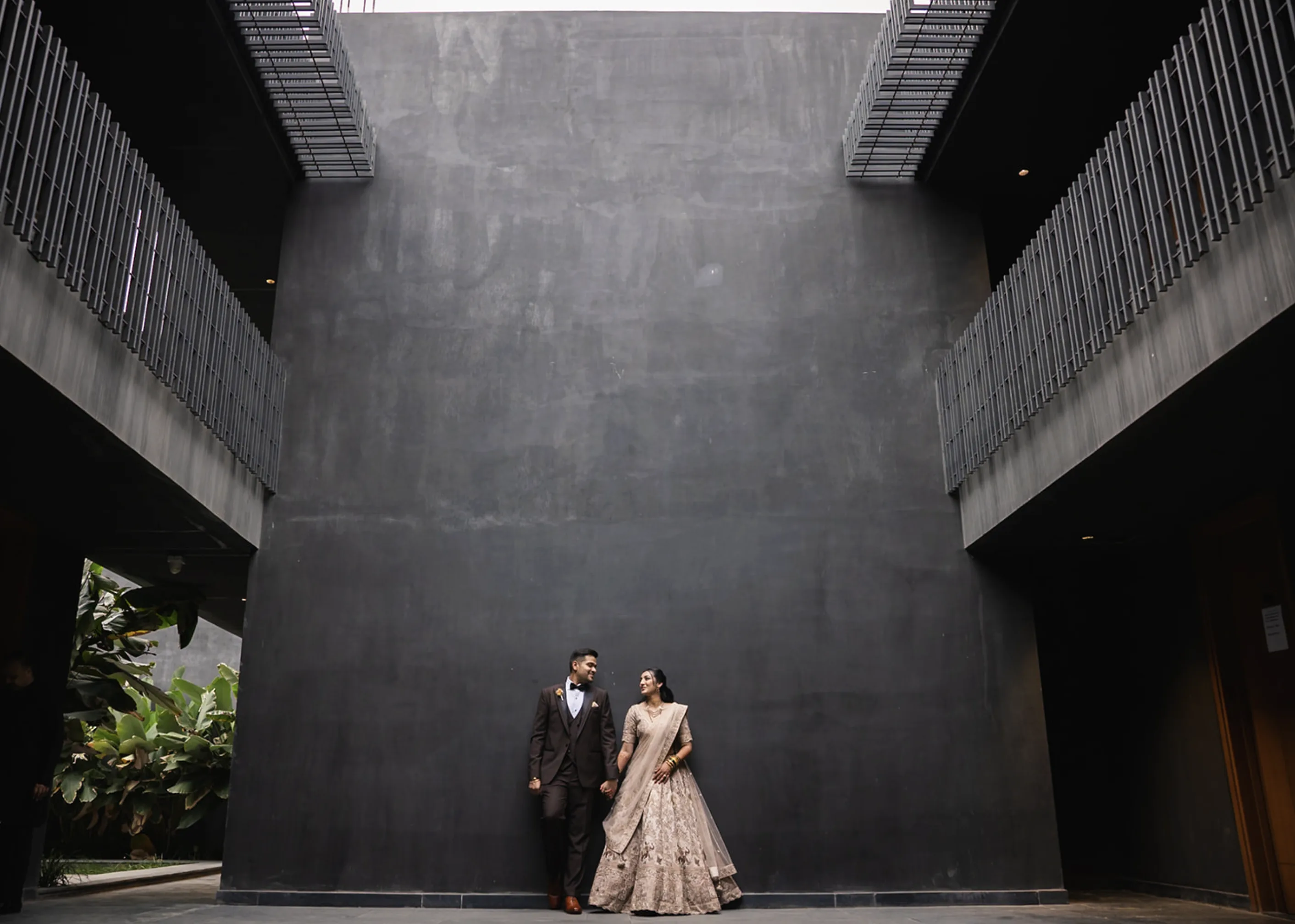
modern wedding couple architectural portrait.
A wide, wide-angle shot featuring a bride and groom standing closely together against a tall, dark gray textured wall in a modern architectural building. The bride wears an elegant light gray or beige embroidered lehenga, while the groom wears a dark suit with a bow tie. Above them, sleek interior balconies frame the shot, creating a bold, geometric, and minimalist aesthetic that draws full attention to the couple in the center.
Awedding daycan take months of planning, but some of its most unforgettable memories can happen in just a few seconds.
A bride takes a deep breath before walking into the ceremony. A father looks at his daughter and suddenly becomes emotional.
A groom sees his bride for the first time. A mother quietly adjusts her daughter's saree before she walks on stage. Friends burst into laughter over something that nobody planned.
These moments may last only 10 seconds.
But years later, they could become the photographs you value the most, This is what makes wedding photography different from simply taking pictures.
A wedding is filled with planned events, rituals and celebrations, but it is also filled with small, spontaneous emotions. Knowing how to notice and preserve those moments can completely change the way a wedding album feels.
Why 10 second can matter so much
When people think about wedding photography, they often imagine the major moments.
The bridal entry.
The exchange of garlands.
The wedding rituals.
The first dance.
The family portraits.
The couple's portraits.
All of these moments deserve to be photographed. But between these larger events are hundreds of smaller moments that happen naturally.
A bride smiling at her mother.
A nervous groom fixing his outfit.
Siblings exchanging a quick glance during a ritual.
A grandparent watching the ceremony from a distance.
A couple holding hands when nobody is looking.
These moments are easy to overlook because they are not part of the official schedule.
Yet they often carry the strongest emotions.
That is why the 10 seconds before, during or after an important event can sometimes become more meaningful than the event itself.
The photograph before the photograph
One of the most interesting parts of wedding photography is that the most powerful frame is not always the obvious one.
Consider a bridal entry.
Everyone knows the bride is about to walk in. Cameras are ready, guests are watching and the music begins.
But what happens just before she enters?
She may look at her parents.
She may take a deep breath.
Her friends may adjust her veil.
Her father may say something quietly to her.
She may smile nervously.
Those few seconds reveal the emotion behind the grand moment, Once the bride starts walking, everyone naturally focuses on the entrance. But the moments immediately before it can show what she was actually feeling.
A thoughtful wedding photographer understands this difference, They do not simply photograph the event.
They observe what leads to the event.
Candid photography is about observation
Candid wedding photography is often described as photography without posing. But there is much more to it than that.
Good candid photography depends heavily on observation.
A photographer needs to notice relationships, reactions, expressions and changes in body language.
Imagine a bride speaking with her grandmother during a wedding ceremony. There may be no dramatic action. They may simply be talking and smiling, It could last for only a few seconds.
If the photographer is paying attention, that interaction can become a beautiful photograph, If they are focused only on the main ceremony, the moment may disappear completely.
This is why candid photography can add depth to a wedding album. It captures what happened naturally rather than only recording what was planned.
Timing can change the entire photograph
Photography is heavily dependent on timing.
The camera can be ready, the composition can be perfect and the lighting can be beautiful. But if the shutter is pressed a second too early or too late, the emotion may be gone.
Think about a laugh, There is a moment just before someone laughs, the instant they start laughing and the moment when the laughter becomes completely natural, Each frame tells a different story.
The same applies to a hug, a tear, a smile or a glance between two people, Sometimes the difference between an ordinary photograph and an emotional photograph is less than a second, That is why wedding photography requires constant awareness throughout the day.
Why emotions cannot be recreated easily
A posed photograph can always be recreated.
You can stand in the same location, adjust your outfit and recreate a similar pose.
But genuine emotion is different.
You cannot easily recreate the exact expression a father had when he first saw his daughter as a bride.
You cannot reproduce the nervous smile of a groom waiting for the ceremony.
You cannot recreate the spontaneous laughter shared between friends.
Once those seconds are gone, they are gone.
Photography becomes the way to preserve them.
This is also why couples should not worry too much about making every photograph look perfect. Some of the most valuable photographs may contain imperfect hair, unexpected expressions or people moving through the frame.
Those imperfections can actually make the photograph feel real.
The role of a wedding photographer
Having a professional camera does not automatically guarantee meaningful wedding photographs.
Equipment is important, but knowing when and where to use it matters just as much.
A wedding photographer has to constantly anticipate what could happen next, If a parent is becoming emotional, there may be another moment coming.
If the bride and groom exchange a quick glance, another interaction may follow, If friends start laughing together, the photographer may need to stay ready instead of immediately moving away.
This requires patience and awareness, Sometimes the best decision is not to interfere.
A photographer who allows a moment to unfold naturally can capture something far more genuine than one who interrupts it to create a pose.
Why couples should be present instead of camera conscious
Many couples worry about how they will look in their wedding photographs.
Will I smile properly?
Where should I keep my hands?
Am I looking at the camera?
Is my pose correct?
These thoughts are understandable, but constantly thinking about the camera can make photographs look less natural.
Instead, focus on the people around you.
Talk to your parents.
Laugh with your friends.
Look at your partner.
Enjoy the rituals.
Take a quiet moment together.
When couples are genuinely involved in the experience, their expressions and body language naturally become more relaxed.
That gives a photographer more opportunities to capture authentic moments.
The best photographs often happen when the couple has temporarily forgotten that the camera is there.
Planning still matters
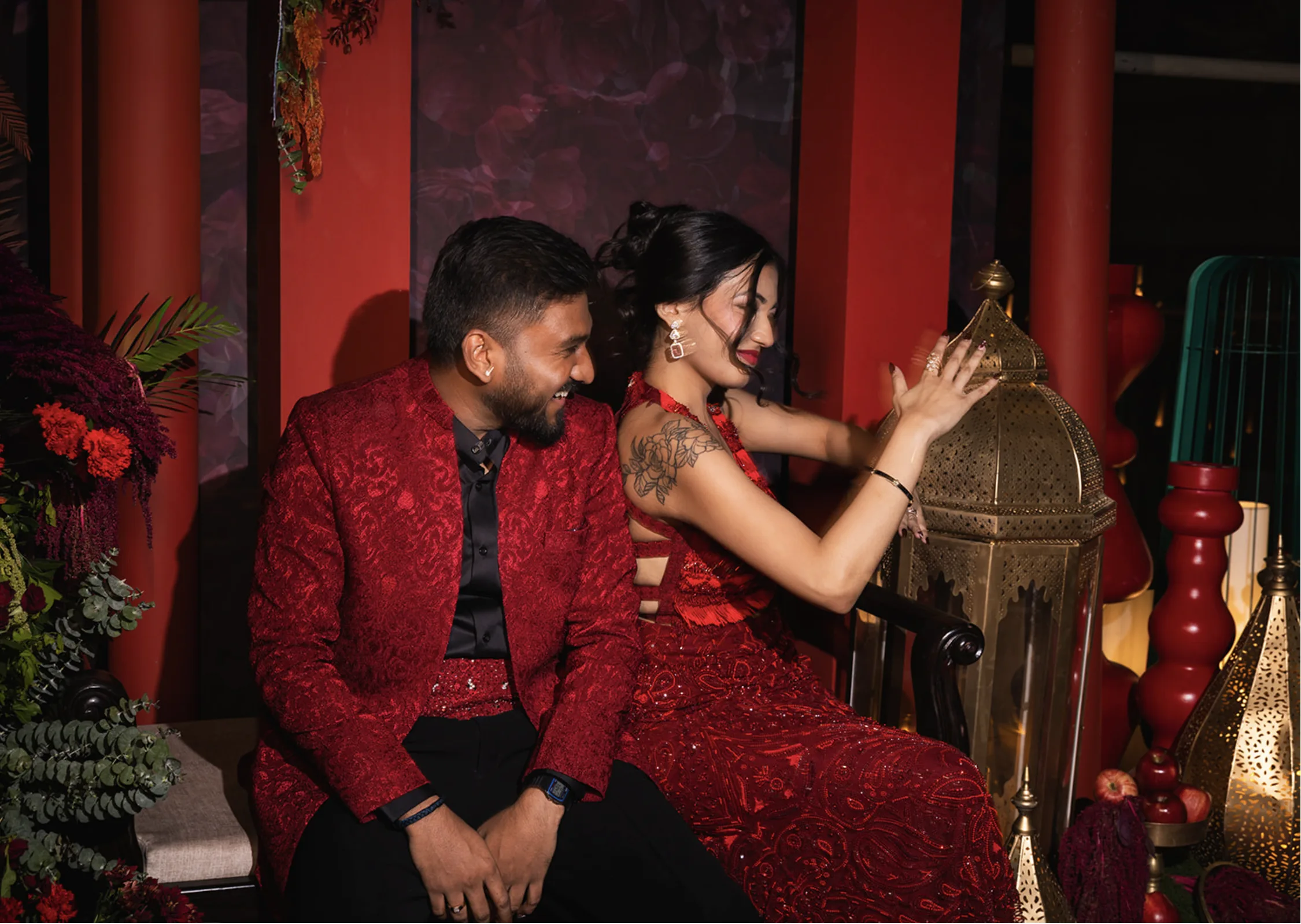
crimson red wedding couple candid portrait.
A candid, vibrant portrait of a couple dressed in matching deep crimson-red formal attire against a rich red background. The groom, wearing a patterned red jacket over a black shirt, looks over laughing at the bride. The bride, wearing a sleeveless backless dress with visible floral shoulder tattoos, reaches playfully toward a tall decorative brass lantern. The warm, moodily lit setting is decorated with floral arrangements and traditional brass decor accents.
Ironically, capturing spontaneous moments requires good planning.
A wedding photographer needs to understand the schedule, venue layout and important rituals beforehand.
Knowing where the bride will enter, where the families will sit and when specific ceremonies will happen helps the photographer anticipate moments rather than simply react to them.
A well planned wedding timeline also prevents unnecessary rushing, When there is enough time between events, photographers can look for smaller interactions instead of constantly moving from one scheduled activity to another.
Good planning creates space for spontaneity.
What should a complete wedding album include?
A strong wedding album should have variety, It should include the important photographs that document the wedding as an event, but it should also include the small photographs that document the people and emotions behind it.
Think of an album as a combination of different layers, There are photographs that show what happened, There are photographs that show who was there.
And there are photographs that show how everyone felt.
The ceremony photographs establish the event,The portraits show the people.
The candid photographs bring the emotions into the album.
Together, they create a much more complete visual record.
The photographs you may value years later
Ask someone to look at their wedding photographs years after the wedding and they may remember the grand portraits first.
But very often, the photographs that trigger the strongest memories are the unexpected ones.
A picture of a parent fixing a child's jewellery.
A friend laughing in the background.
A couple sharing a quiet look.
A grandparent sitting peacefully during the ceremony.
A father trying to hold back tears.
These photographs may not have been planned, but they can become priceless, They remind you of people, relationships and emotions that existed around the wedding day.
And as time passes, those photographs become even more important.
One ceremony becomes another. Guests arrive, celebrations begin and before you realize it, the day is over.
You cannot pause time, But photography can preserve what time takes away.
That is why those 10 seconds matter.
Not because 10 seconds is a magical number, but because meaningful emotions can appear and disappear within that small window.
The glance.
The smile.
The tear.
The laugh.
The hug.
The silence before a big moment.
A wedding album should not only show how your wedding looked. It should help you remember how it felt.
And sometimes, all it takes is one photographer noticing the right moment at the right time, Because the moments that change your wedding album are not always the biggest ones.
Sometimes, they are simply the 10 seconds nobody thought to plan.
1. Why are small moments important in wedding photography?
▼
Small moments often capture genuine emotions that planned photographs cannot. A glance, smile, tear, hug or family interaction can become one of the most meaningful photographs in a wedding album.
2. What is the difference between candid and traditional wedding photography?
▼
Traditional wedding photography usually focuses on planned portraits, rituals and group photographs. Candid wedding photography focuses more on spontaneous emotions, reactions and natural interactions that happen throughout the wedding.
3. How can couples get more natural wedding photographs?
▼
Couples can focus on enjoying their wedding rather than constantly thinking about the camera. Interacting naturally with family, friends and each other gives a wedding photographer more opportunities to capture genuine expressions.
4. How important is timing in wedding photography?
▼
Timing is extremely important because emotions can change within seconds. A photographer who anticipates a moment and captures it at the right instant can preserve expressions and reactions that may never happen again.
5. How do I choose the right wedding photographer in Bangalore?
▼
Look beyond the camera equipment and posed photographs. Review complete wedding galleries, observe how the photographer captures emotions and candid moments, and choose someone whose photography style matches the way you want to remember your wedding day.
Ready to get started?
Your wedding lasts a day. Let every second live forever.