Art of Capturing Indian Weddings Without Missing Moments
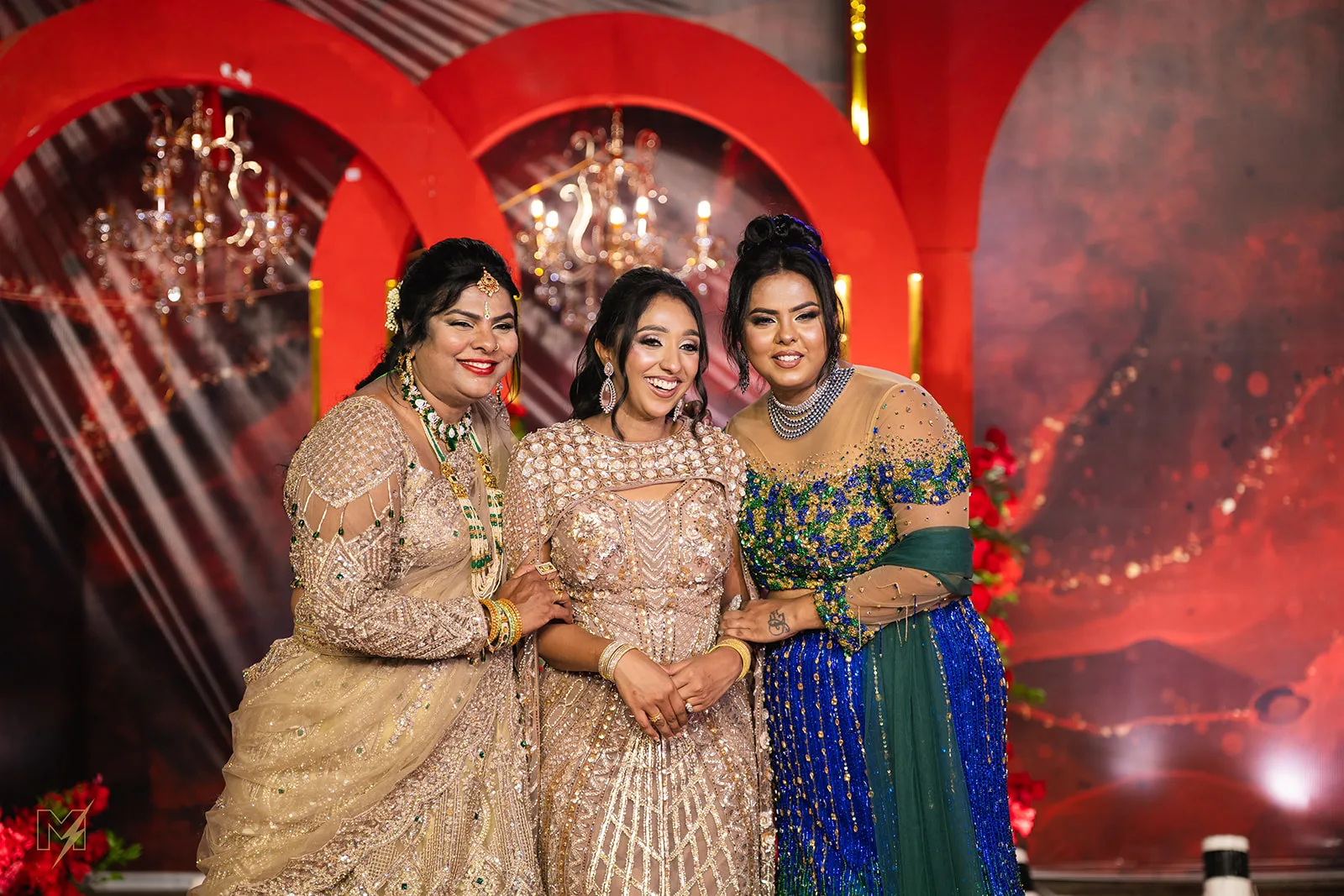
Candid Portrait of Indian Bride posing with Family Members at Reception
A vibrant indoor reception photograph capturing a happy moment between three women standing close together on stage. The bride in the center wears a cape style champagne gold outfit with intricate beadwork and drop earrings, smiling warmly. To her left stands a woman in a metallic beige outfit layered with green emerald necklace strands, and to her right stands another woman in a bright royal blue and green embellished gown. The stage backdrop features bold red architectural arches, soft bokeh lighting, and hanging chandeliers.
Indian weddings are rarely about one ceremony, one location or one important photograph. They are a collection of rituals, people, emotions, traditions and spontaneous moments that unfold from morning until night.
A grandmother adjusting the bride’s jewelry. A nervous smile before the ceremony begins. Friends laughing in a corner. Parents watching their child take the next step in life.
These moments may last only a few seconds, but they often become the memories people return to years later.
This is where Indian wedding photography becomes more than simply taking pictures.
Every Indian wedding has its own rhythm
Indian weddings can move quickly. One moment the family is preparing for a ritual, and the next everyone is gathering for a ceremony. There may be multiple events happening across different spaces, with guests arriving at different times and traditions following a carefully planned sequence.
For a photographer, understanding this rhythm is essential.
The job is not only to photograph what is happening in front of the camera. It is also about anticipating what could happen next.
A photographer who understands the flow of an Indian wedding can be in the right place before an important moment unfolds. This makes it possible to capture genuine expressions instead of asking people to recreate them later.
The moments between the rituals matter too
Wedding photography often focuses on the major ceremonies, but some of the most meaningful photographs happen in between them.
Think about the bride sitting quietly before her makeup begins. The groom sharing a joke with his friends. Parents discussing last minute arrangements. Cousins meeting after years apart. A flower falling during a ritual. Someone laughing when nobody expected it.
These are not planned photographs.
They are pieces of the wedding story.
This is why candid wedding photography has become such an important part of modern celebrations. It allows the photographer to document the atmosphere of the day rather than only its formal highlights.
Understanding Indian Indian weddings photography traditions
Indian weddings involve traditions that can vary significantly between communities and families. The meaning, sequence and visual elements of a ceremony can change depending on cultural and regional practices.
A photographer does not necessarily need to know every tradition by heart, but understanding the significance of the important rituals helps them photograph them thoughtfully.
Knowing when a particular ritual is about to happen can help the photographer prepare for the expressions and interactions surrounding it.
The goal is not simply to photograph the ritual itself.
It is to photograph what the ritual means to the people experiencing it.
People create the real wedding story
A wedding album is ultimately about people.
The couple may be at the centre of the celebration, but their story is surrounded by parents, grandparents, siblings, friends, relatives and countless people who have shaped their lives.
A photograph of a father looking at his daughter can sometimes communicate more than a perfectly posed portrait.
A grandmother blessing the couple can carry generations of emotion in a single frame, Friends laughing together can bring back the energy of the entire celebration.
This is why a thoughtful Indian wedding photographer looks beyond the couple and observes the people around them.
Why anticipation matters in wedding photography
Some wedding moments cannot be recreated.
The expression on someone's face when they see the bride for the first time.
The laughter during an unexpected incident. A spontaneous hug between two family members.
A photographer has only a few seconds to recognise these moments and respond.
This requires anticipation.
Instead of constantly asking people to pose, photographers can observe patterns throughout the event. Who is interacting with whom? Where are the important rituals taking place? Which family members are emotionally involved?
Observation allows photographs to happen naturally.
Light can change the entire photograph
Lighting is another important part of wedding photography.
Indian weddings can move between very different environments.
A morning ceremony may take place in natural light, while an evening reception may involve stage lighting, decorative lights and controlled artificial illumination.
Good photography is not simply about having expensive equipment, It is about understanding how light interacts with people, clothing, decorations and surroundings.
The photographer needs to know when to use available light, when additional lighting is necessary and how to maintain natural looking skin tones while still creating visually strong images.
The challenge of photographing large celebrations
Indian weddings can involve hundreds of guests. With so many people moving around, keeping track of important moments can become challenging.
This is where preparation becomes important.
Understanding the wedding schedule, identifying key family members and knowing the locations beforehand can help photographers work more efficiently.
A clear plan does not mean every photograph is planned.
It simply gives the photographer enough awareness to remain flexible when something unexpected happens.
Technology helps, but observation leads
Modern cameras offer impressive image quality, fast autofocus and excellent low light performance. These tools can make wedding photography more efficient.
But technology cannot decide which moment matters.
A camera can capture an expression, but the photographer has to recognise why that expression is important.
The strongest wedding photographs often come from a combination of technical knowledge and human observation.
Equipment records the moment.
The photographer gives it context.
Creating a complete wedding story
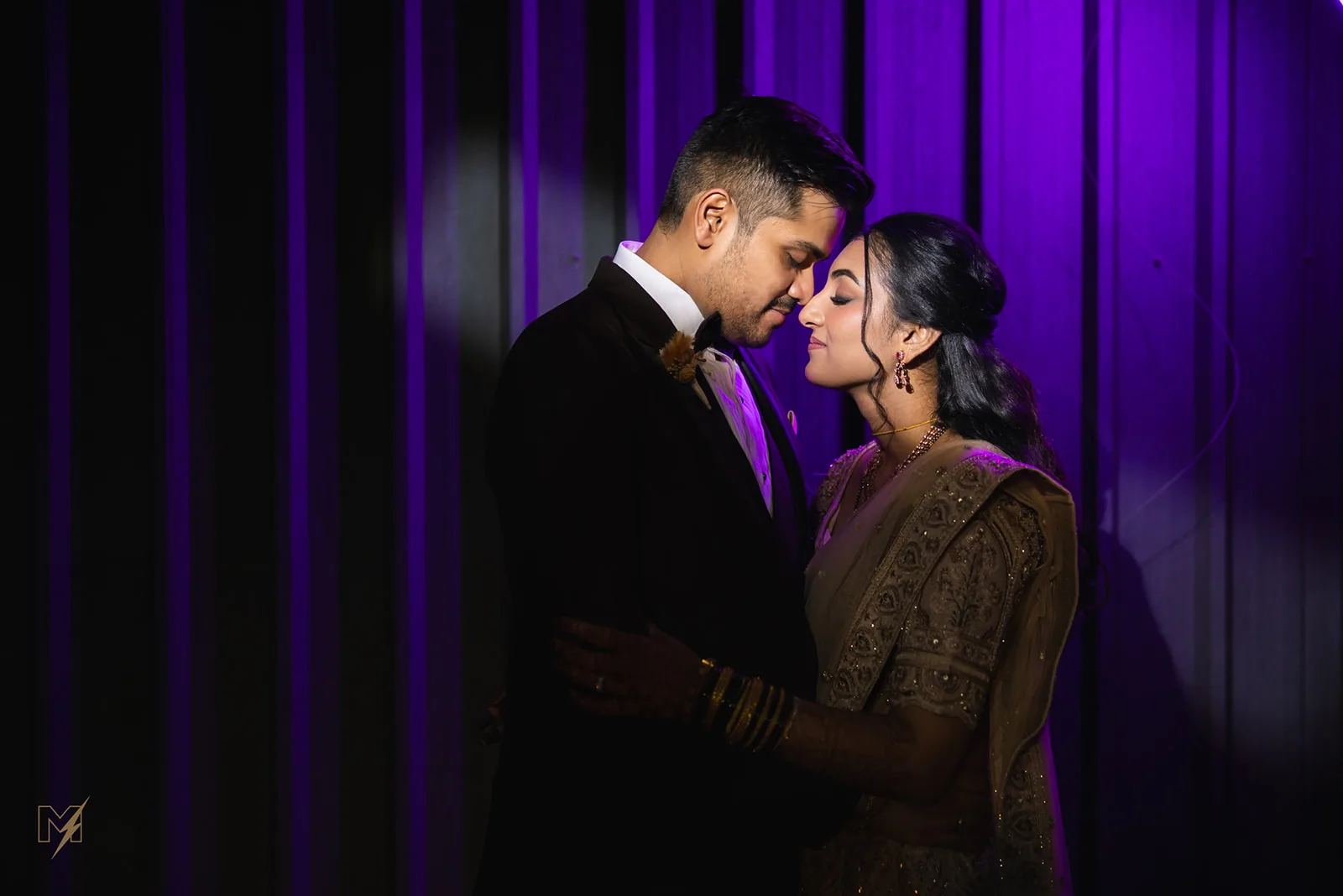
Intimate Romantic Couple Portrait with Purple Moody Stage Lighting
An intimate portrait of a couple standing close face to face against a corrugated vertical panel backdrop illuminated with deep purple atmospheric lighting. The groom, dressed in a dark suit with a white shirt and bowtie, gently holds the bride around her waist while looking down at her with a subtle smile. The bride, wearing a beige gold embroidered saree with intricate detailing on the blouse and drop earrings, looks upward toward him. A focused spotlight beam highlights their facial expressions, creating a warm, romantic, and dramatic contrast.
A good wedding album should feel like a journey.
It should show the anticipation before the ceremony, the people who made the day special, the important rituals, the unexpected laughter, the quiet moments and the celebration that follows.
This is where documentary thinking becomes valuable.
Instead of treating every photograph as an individual image, photographers can think about how photographs work together.
A wide photograph can establish the environment. A close portrait can reveal emotion. A detail photograph can explain the setting.
A candid frame can bring movement into the story.
Together, these photographs create a visual narrative.
What couples should look for in a wedding photographer
When choosing a wedding photographer, couples often begin by looking at portfolios. That is important, but there are other questions worth asking.
Can the photographer handle long wedding schedules?
Do they understand different ceremonies?
Can they work in changing lighting conditions?
Do they photograph family and guests as well as the couple?
Do their photographs show genuine moments instead of only posed portraits?
Most importantly, does their portfolio tell the story of an entire wedding?
These questions can help couples understand whether a photographer's approach matches the kind of memories they want to preserve.
The photographs become memories
Years after the wedding, people may not remember every detail of the decoration or the exact sequence of events.
But a photograph can bring back a feeling instantly.
A single frame can take someone back to the sound of the music, the nervousness before the ceremony, the laughter with friends or the warmth of being surrounded by family.
It is not about photographing everything simply because everything is happening, It is about recognising what deserves to be remembered and capturing it while it is still real, Because when the celebrations end, the photographs are what allow those fleeting moments to live on.
1. What makes Indian wedding photography different?
▼
Indian weddings often involve multiple ceremonies, traditions, locations and groups of people. This requires photographers to understand the wedding flow while documenting both planned and spontaneous moments.
2. How can a photographer avoid missing important wedding moments?
▼
Preparation, understanding the schedule, knowing key family members and anticipating important rituals can help photographers stay prepared without making the day feel staged.
3. Why is candid photography important at Indian weddings?
▼
Candid photography captures natural expressions and interactions that may happen outside the main ceremonies, helping create a more complete visual story.
4. Should wedding photography include family and guests?
▼
Yes. Family and guests are an important part of the wedding story. Photographing their interactions, reactions and emotions adds context to the couple's photographs.
5. How should couples choose an Indian wedding photographer?
▼
Couples should review complete wedding galleries rather than only selected portraits. They can also consider the photographer's ability to handle different ceremonies, lighting conditions, family groups and candid moments.
Ready to get started?
Your wedding lasts a day. Let every moment have a story.