Why Lighting Can Make or Break Your Wedding Photographs
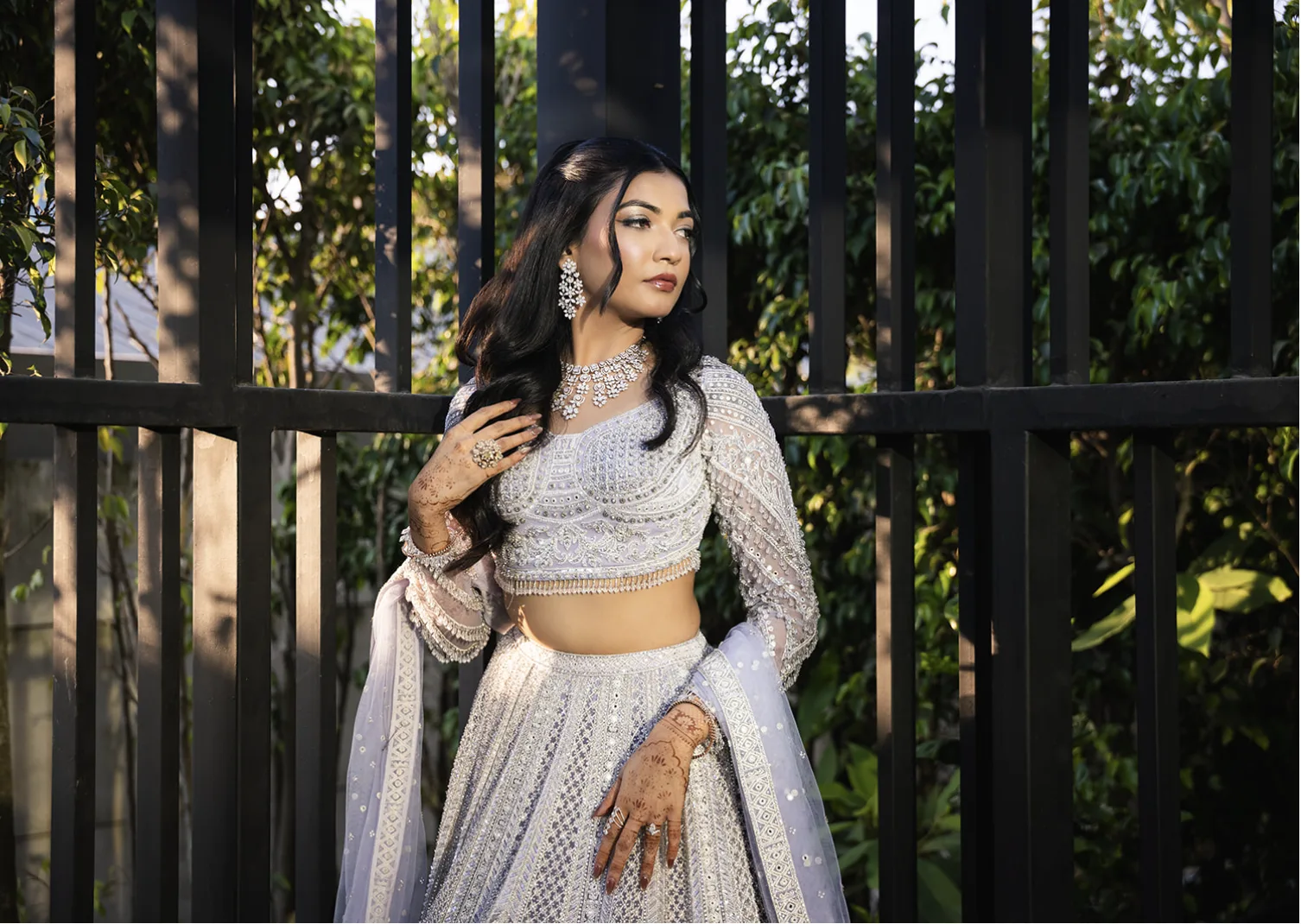
Elegant Woman in Heavily Embellished Silver Lavender Designer Lehenga
A stylish, elegant portrait of a woman dressed in a breathtaking, heavily embroidered silver and light lavender designer lehenga ensemble. The outfit features detailed beadwork, mirror accent details, full sheer sleeves, and a matching dupatta draped gracefully over her arms. She pairs the outfit with statement diamond jewelry, including a sparkling choker necklace, chandelier earrings, and a cocktail ring, along with intricate henna designs on her hands. Set against a chic dark metal fence framed by soft natural greenery, this look is perfect inspiration for modern Indian bridal wear, reception outfits, and luxury festive fashion.
Imagine this.
The bride walks into the venue. Her jewelry catches the light, her outfit moves as she walks and everyone turns to look at her. It is one of those moments that lasts only a few seconds.
Now imagine that same moment photographed under harsh overhead lighting, with deep shadows across her face.
The moment has not changed.
The photograph has.
This is why lighting is one of the most important elements of wedding photography. A beautiful location, carefully chosen outfit and genuine emotion can all be affected by how light falls on the subject, Understanding wedding lighting helps explain why some photographs feel natural and dimensional while others can look flat, overly bright or too dark.
Light does more than brighten a photograph
The basic purpose of light may seem simple. It allows the camera to see the subject.
But in photography, light also creates mood, depth, texture and dimension.
Soft light can make portraits feel gentle and natural. Directional light can create depth and stronger shadows. Backlighting can separate the couple from the background and create a sense of atmosphere, This means photographers do not simply look for enough light, They look for the right light.
Natural light can create beautiful wedding portraits
Natural light is one of the most useful tools in wedding photography, Morning ceremonies, outdoor portraits and photographs near large windows can provide soft and flattering illumination.
When the sun is lower in the sky, the light can also create warmth and depth, However, natural light is constantly changing, Clouds can soften sunlight. Strong afternoon sun can create hard shadows.
A change in location can completely alter the direction and intensity of light.
An experienced photographer observes these changes and adjusts accordingly rather than relying on one fixed approach.
The golden hour effect
You may have noticed wedding photographs taken shortly before sunset that have a distinctive warmth, This period is commonly known as golden hour.
When the sun is lower on the horizon, its light travels through more of the atmosphere and can become softer and warmer. This can create beautiful conditions for couple portraits.
But golden hour is not a magic solution for every photograph.
The location, weather, background and timing all influence the final result. A photographer still needs to understand how to position the couple and work with the available light.
Indoor weddings create a different challenge
Many Indian weddings take place indoors, where lighting can be more complicated.
A venue may have chandeliers, stage lights, decorative lighting, spotlights and colored LEDs operating at the same time, These different sources can produce different colours and levels of brightness across the same space.
For a photographer, this means constantly evaluating the environment.
A ceremony may begin under soft ambient lighting and later move to a stage with much stronger illumination. Reception photographs may require an entirely different approach.
Good wedding photography lighting is therefore about adaptation.
Harsh light is not always bad
Strong sunlight is often considered difficult for portraits because it can create hard shadows, But harsh light is not automatically bad light.
When used intentionally, strong directional light can create dramatic patterns, silhouettes and striking portraits. Shadows can add depth and shape to a photograph.
The difference is control, When harsh light is unavoidable, photographers can change the subject's position, use available shade or introduce additional lighting to balance the exposure.
The objective is not always to remove shadows.
Sometimes it is to use them creatively.
Why flash does not mean artificial looking photographs
There is a common misconception that flash photography automatically produces photographs that look unnatural.
That usually depends on how the flash is used.
A photographer can use flash directly, bounce it off a surface or position it away from the camera. Each approach creates a different result.
During a reception, for example, carefully controlled flash can help maintain detail when the venue becomes darker. It can also help freeze movement during energetic celebrations.
The purpose of professional lighting is not to make the photograph look artificial, It is to make the light work for the photograph.
Lighting can affect skin tones and wedding colours
Indian weddings are filled with colour.
From bridal outfits and flowers to jewelry and venue decorations, there can be several strong colors within a single frame.
Lighting affects how these colors appear.
Different light sources can produce different colour temperatures, which may change how skin tones, clothing and decorations are rendered.
This is one reason photographers pay attention to white balance and exposure throughout the wedding.
Accurate colour is particularly important for wedding photography because couples often want their photographs to reflect how the celebration actually looked.
Lighting helps tell the story
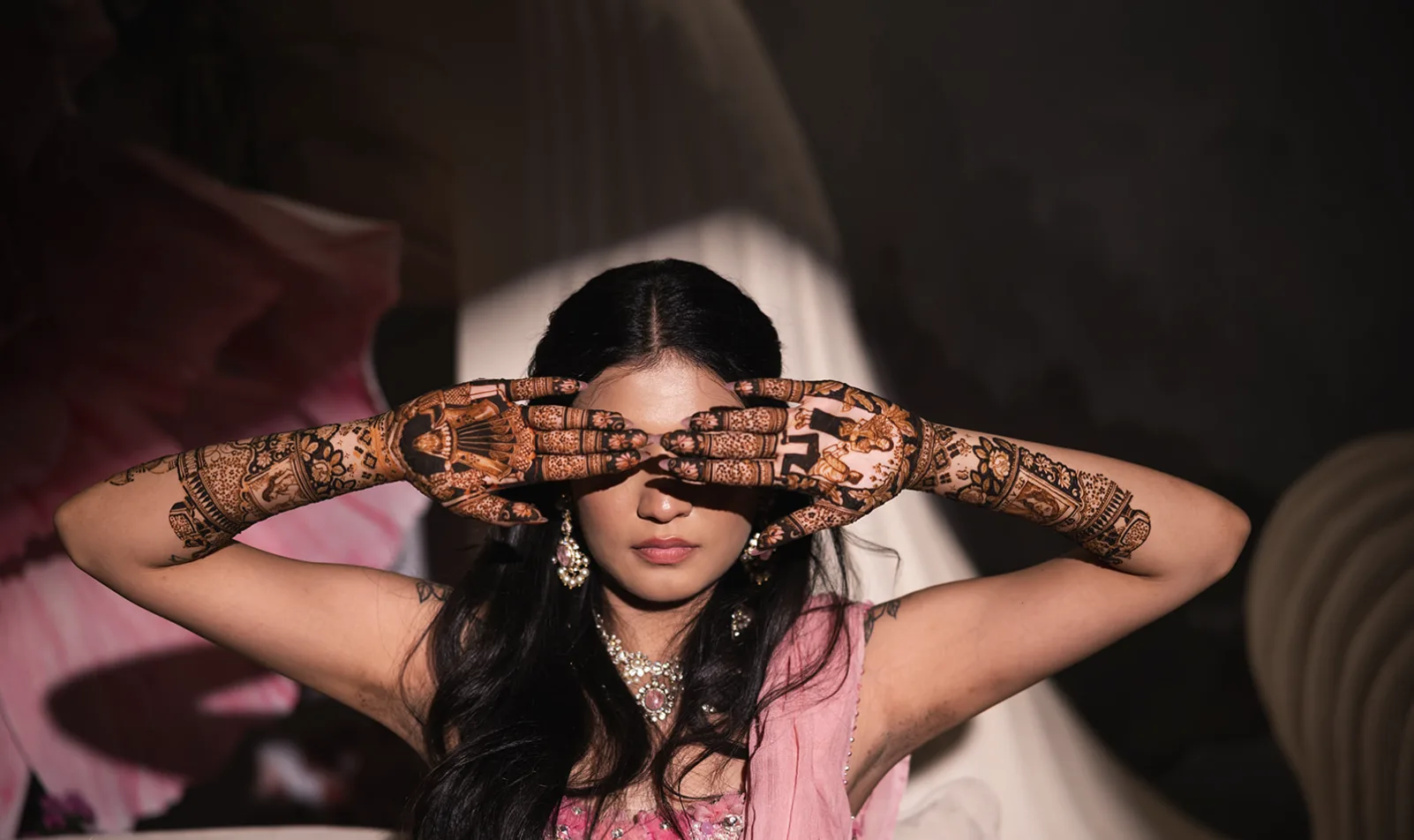
Artistic Bridal Mehendi Hands Covering Face Portrait
A stunning, artistic close-up portrait of a bride gracefully displaying her intricate mehendi (henna) design. She holds her beautifully adorned hands across her face, highlighting detailed traditional artwork on her palms and forearms while wearing a pastel pink ethnic outfit and elegant jewelry. This dramatic, soulful shot is ideal for wedding photography inspiration, mehendi ceremony highlights, and bridal beauty blogs.
Lighting is not only a technical consideration.
It can become part of the storytelling.
A quiet bridal preparation photograph beside a window can feel intimate because of the soft natural light.
A lively dance floor photograph can feel energetic because of movement, contrast and colourful venue lighting.
A ceremony photograph can feel more focused when the important subjects are naturally separated from their surroundings.
The light helps guide the viewer's attention.
Lighting is not only a technical consideration.
It can become part of the storytelling.
A quiet bridal preparation photograph beside a window can feel intimate because of the soft natural light.
A lively dance floor photograph can feel energetic because of movement, contrast and colourful venue lighting.
A ceremony photograph can feel more focused when the important subjects are naturally separated from their surroundings, The light helps guide the viewer's attention.
What happens when there is very little light
Low light wedding photography requires careful technical decisions, When the available light is limited, photographers may need to adjust shutter speed, aperture and ISO while ensuring that important moments remain sharp.
Higher ISO settings can help capture photographs in darker environments, but excessive ISO can introduce unwanted noise.
A slower shutter speed can allow more light into the camera, but movement may become blurred, This is where experience becomes important. Wedding photography does not give photographers the opportunity to repeat every moment.
A first dance, emotional reaction or spontaneous celebration happens once.
The photographer needs to read the venue
Before a wedding begins, understanding the venue can make a significant difference.
Where does natural light enter?
Which areas are brightly lit?
Where will the main ceremony take place?
What kind of lighting is available on the stage?
Will the couple have access to an outdoor area?
These details can help photographers anticipate challenges instead of reacting to them at the last second, Good preparation allows the photographer to concentrate on the people and moments rather than constantly fighting the environment.
Great lighting supports genuine moments
The best wedding photographs are not always the ones with the most complicated lighting setup.
Sometimes the most memorable photograph is simply a father looking at his daughter, a couple sharing a quiet smile or friends laughing together.
Lighting should support those moments rather than distract from them, The photographer's role is to understand the available light, make technical decisions when necessary and remain ready for the unexpected, Because wedding photography is ultimately about people.
The real difference is knowing when to use light
There is no single lighting technique that works for every wedding.
Natural light, ambient light, flash and artificial lighting all have their place.
The important part is knowing when and how to use them.
A skilled photographer does not simply ask whether there is enough light.
They ask what the light is doing, how it affects the subject and whether it helps communicate the feeling of the moment, That is what turns lighting from a technical necessity into a storytelling too, Your wedding day will have countless moments worth remembering.
The right lighting ensures those moments are not only captured, but captured in a way that still feels true to how they happened.
1. Why is lighting important in wedding photography?
▼
Lighting affects exposure, skin tones, colours, shadows, depth and overall mood. The right lighting helps a photographer capture both the details and emotions of a wedding naturally.
2. Is natural light better than flash for wedding photography?
▼
Neither is universally better. Natural light can create soft and authentic images, while flash can be useful in dark venues and during evening events. The choice depends on the location and situation.
3. How does indoor lighting affect wedding photographs?
▼
Indoor venues can have multiple light sources with different colours and intensities. Photographers need to adjust their camera settings and lighting techniques to maintain consistent exposure and natural looking colours.
4. What is golden hour and why is it popular for wedding photographs?
▼
Golden hour is the period around sunrise or sunset when sunlight is generally softer and warmer. It can create flattering conditions for outdoor couple portraits.
5. Can good wedding photographs be taken in low light?
▼
Yes. With suitable camera settings, lenses and lighting techniques, photographers can capture sharp and well exposed images even in darker environments.
Ready to get started?
Let the right light turn your moments into memories.